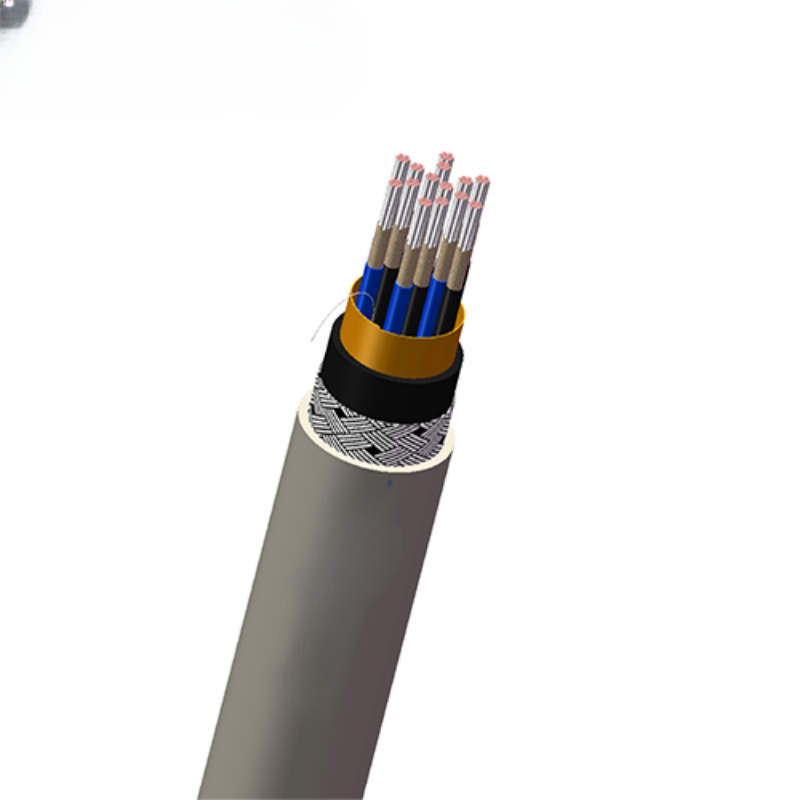
Electrical wires and cables are the "blood vessels" of electrical systems. Incorrect selection or improper installation can lead not only to equipment failure and soaring energy consumption, but also to major safety accidents such as fires and electric shocks. Many engineering problems stem from neglecting the two core aspects: selection criteria and installation specifications. Today, we'll provide a practical guide that balances safety and economy. I. Core Principles for Wire and Cable Selection: 5 Dimensions for Precise Matching and Avoiding Pitfalls 1. Current Carrying Capacity is Fundamental: Select the Cross-Section Based on "Calculated Current + Margin" • First, calculate the rated current and maximum operating current of the electrical equipment. Inductive loads (such as motors) require an additional 20%-30% starting current margin to prevent overheating due to overload. • Under the same current carrying capacity, the higher the ambient temperature of the cable installation environment and the more cables are routed in the conduit, the greater the current carrying capacity reduction factor. For example, for conduit installation at 30℃, the current carrying capacity needs to be multiplied by a correction factor of 0.8. • Standard minimums: Copper core cables for lighting circuits ≥1.5mm², power circuits ≥2.5mm², and high-power equipment (such as air conditioners and water heaters) require separate wiring with a cross-section of at least 4mm². 2. Voltage Level Must Be Compatible: Avoid "Underpowering" • For civil buildings, prioritize 0.6/1kV voltage level cables to meet lighting, socket, and general power needs; high-voltage distribution systems require selecting corresponding levels such as 10kV and 35kV according to the design. • Voltage drop verification cannot be ignored: the voltage drop at the end of power lines should be ≤5%, and for lighting lines ≤3%. For extra-long distance installations, the cable cross-section needs to be increased to prevent equipment from failing to start properly. 3. Choose the right insulation sheath material: Environment determines lifespan. Scenario Type | Recommended Material | Core Advantages Ordinary Indoor | PVC (Polyvinyl Chloride) | Low cost, easy to install Industrial/High Temperature | XLPE (Cross-linked Polyethylene) | Heat resistant to 90℃, high current carrying capacity, aging resistant High-Density Occupancy Areas | LSZH (Low Smoke Zero Halogen) | Low smoke and non-toxic during combustion, avoiding suffocation risk Wet/Corrosive Environments | Rubber Sheath | Water and acid/alkali resistant, suitable for outdoor direct burial 4. Add protective structures as needed: Shielding and armoring without waste • Strong electromagnetic interference scenarios (such as inverters, PLC control circuits): Choose copper wire braided shielded cables, with a shielding density ≥85%, and require reliable single-point grounding to prevent signal interference. • Mechanical damage risk scenarios (such as direct burial, cable trench laying): Choose steel tape armored cables to enhance compression and impact resistance; armoring can be omitted for conduit laying to reduce costs. • Fire emergency circuits: Choose NH (fire-resistant) cables, which can continuously supply power for more than 90 minutes during a fire, ensuring the operation of critical equipment such as fire pumps and emergency lighting. 5. Look for national standard certification: Reject non-standard products • When purchasing, you must verify the CCC mandatory certification and product test reports. Conductor resistance and insulation thickness must meet national standard requirements. • The "cutting corners" trap of non-standard cables: Using recycled copper for conductors (resistance exceeds standards), insufficient insulation layer thickness (easy to break down), saving money in the short term, but potentially causing fires in the long term, resulting in more harm than good. II. Wire and Cable Laying Specifications: 6 Key Points for Standardized Construction and Safety 1. Laying Path: Avoid risky areas • Cables should be kept away from heat sources (such as boilers, radiators), corrosive media, and sharp edges. When laid parallel to heating pipes, the distance should be ≥0.5m; when laid across heating pipes, the distance should be ≥0.25m. • Indoor cable laying should prioritize cable trays and concealed conduit installation to prevent external damage to exposed cables; cable trays must be installed horizontally and vertically straight, with support spacing conforming to specifications (horizontal trays ≤ 1.5m, vertical trays ≤ 2m). 2. Conduit Installation: Pipe diameter and number of cables are important considerations. • The total cross-sectional area of cables in a conduit should not exceed 40% of the conduit's internal cross-sectional area to facilitate heat dissipation and future maintenance and replacement; no more than 6 cables should be placed in a single conduit to avoid signal interference. • Steel pipes require anti-corrosion treatment, and protective sleeves should be installed at the pipe openings to prevent damage to the cable insulation; PVC pipes are strictly prohibited in high-temperature, humid, or mechanically impacted environments. 3. Direct Burial Installation: Protection and marking are crucial. • Direct-buried cables should be armored cables, laid at a depth of ≥ 0.7m (≥ 1m in agricultural areas), with a 100mm thick layer of fine sand above and below the cable, and then covered with concrete slabs or bricks to prevent external crushing. • Clear marker posts should be placed at cable bends and joints, indicating the cable model and direction for easy future maintenance. 4. Cable Tray Installation: Spacing and fixing must be standardized. • Cables should be laid in layers within the cable tray, with high-voltage and low-voltage cables separated by a distance of ≥ 0.3m; control cables and power cables should also be laid in separate layers to avoid electromagnetic interference. • There should be no joints in the cables within the cable tray; joints should be placed in junction boxes or cable trenches and properly waterproofed and moisture-proofed; the grounding resistance of the cable tray should be ≤ 4Ω to ensure lightning protection and anti-static safety. 5. Vertical Shaft Installation: Fire sealing is key. • Fire-resistant putty and fire-resistant partitions should be used at each floor slab in the cable shaft to prevent fire from spreading along the shaft; cables in the shaft should be fixed to supports to prevent damage from their own weight. • In super high-rise buildings, fire-resistant partitions should be installed according to fire zones in the vertical shaft, and fire-resistant cables should be used to enhance fire safety. 6. Post-installation acceptance: 3 steps are essential: 1. Visual inspection: The cable insulation layer should be free from damage or flattening, and the laying path should meet the design requirements; 2. Insulation testing: Measure the cable insulation resistance with a megohmmeter. For 0.6/1kV cables, the insulation resistance should be ≥1MΩ. Power can only be supplied after passing the test; 3. Record keeping and archiving: Retain information such as cable model, laying path, and test data to provide a basis for future maintenance. III. Common industry misconceptions: Avoid these 3 pitfalls: 1. Misconception 1: The larger the cable cross-section, the better → Over-sizing increases procurement costs, and makes pipe threading difficult and construction inefficient; 2. Misconception 2: No protection during laying → The cable insulation layer is scratched by sharp objects, leading to short circuits and fires during long-term operation; 3. Misconception 3: Casual handling of joints → Inadequate waterproofing and moisture protection at the joints leads to oxidation and overheating, becoming a fire hazard. There is no such thing as "almost right" when it comes to cable selection and laying; every detail is crucial for safety. Following the principle of "selecting according to needs and laying according to specifications" is essential for stable operation of the electrical system and preventing safety risks from the source.
Cable Selection Guide
Jan 22, 2026
·
xycablegroup
Share
0 comments